Antolini at Marmomac 2026
Antolini once again featured at Marmomac, held in September 2026, with an exhibition design that represents the natural evolution of a vision formed over seventy years of history.
Alongside the historic stand inside Veronafiere, featuring a redesigned layout and finishes conceived by Alessandro La Spada, designer and art director, the Verona-based brand will also be present at the Antolini Pavilion at the Gallerie Mercatali with the goal to explore its capacity for transformation through architecture, light, technology and design.
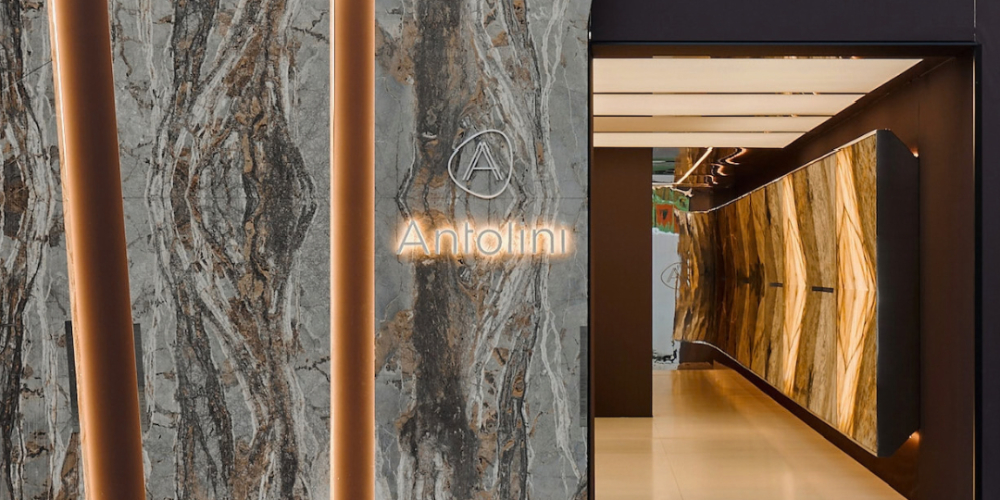
For Marmomac 2026, the designer has conceived an immersive space for Antolini inspired by the primordial force of the quarry. An architecture to be traversed, in which natural stone is never presented in a one-dimensional way, but continually changes its expression in relation to light, movement and the various surface finishes.
On the outside, the compact volume of the stand was defined by a deep shade of dark cherry, a contemporary reinterpretation of the color of the earth. Emerging from this shell, like fragments of matter projected into space, were Origami: large stainless steel display elements which echo the central theme of the installation, cradling the stones with gentle inclines that invite visitors to observe their patterns up close and discover their tactile qualities.
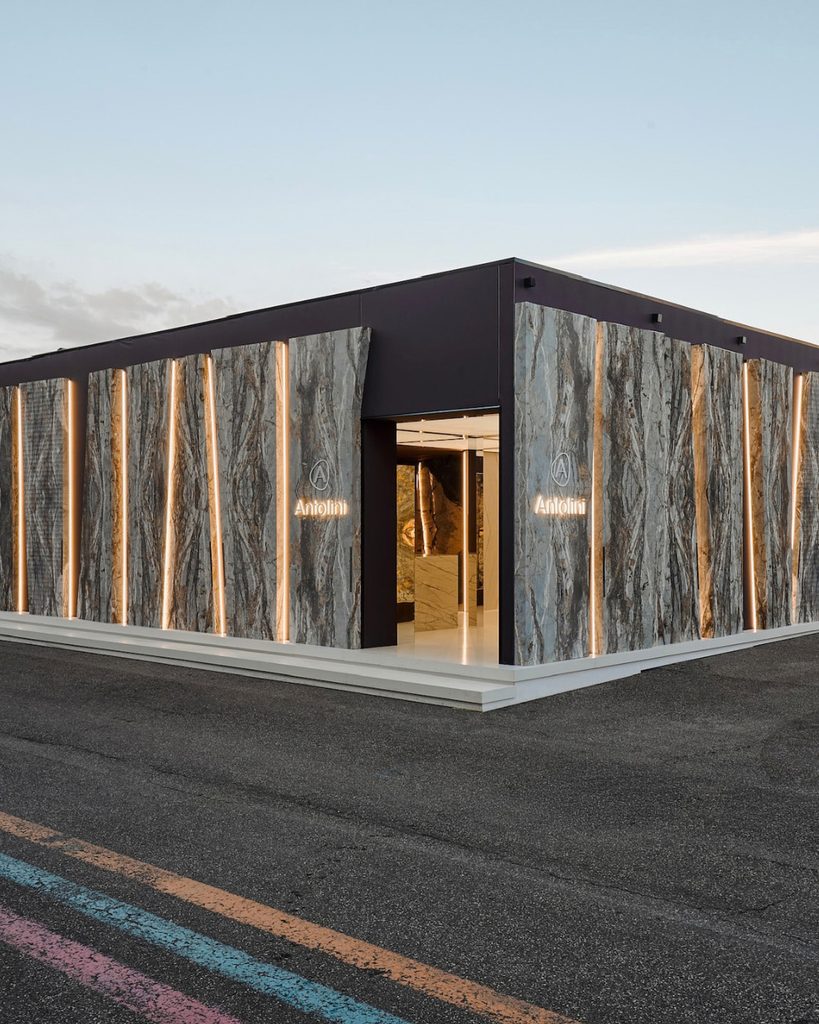
At the entrance, an irregular composition of these cantilevered geometric forms showcased Blueroots, a marble that has recently been introduced as part of Antolini’s Exclusive Collection, presented in a selection of finishes from the Textures+ Collection. Upon crossing the threshold, visitors encountered the reception area, dominated by Quarzite Lilac, another recent addition to the Exclusive Collection. Featured on the walls in various finishes from the Textures+ Collection, the stone also shaped the sculptural reception desks.
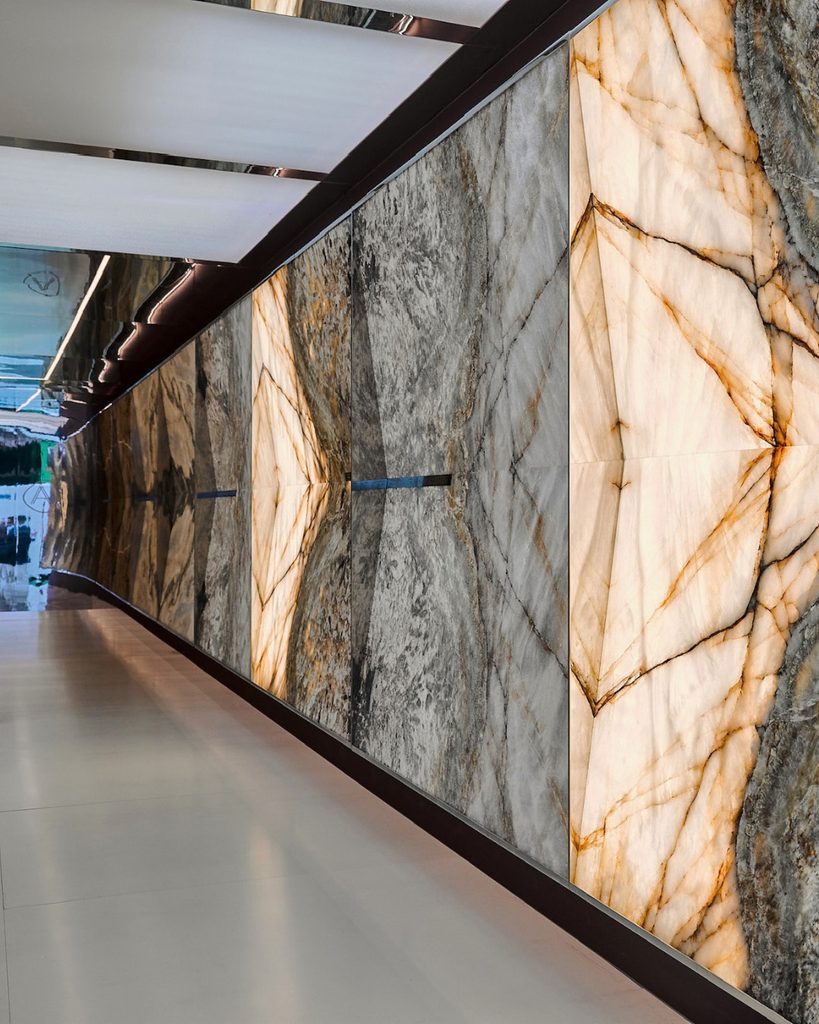
From the reception area, the wall on the right guided visitors towards the heart of the stand, marked by a sequence of Patagonia Vitrum, Invisible® Sunset and Pangea Blue, rendered in various finishes. The stones projected out from the dark cherrybackground and a light source concealed behind the structure illuminated the perimeter of the elements so that they appeared visually detached from the wall, accentuating their suspended aspect.
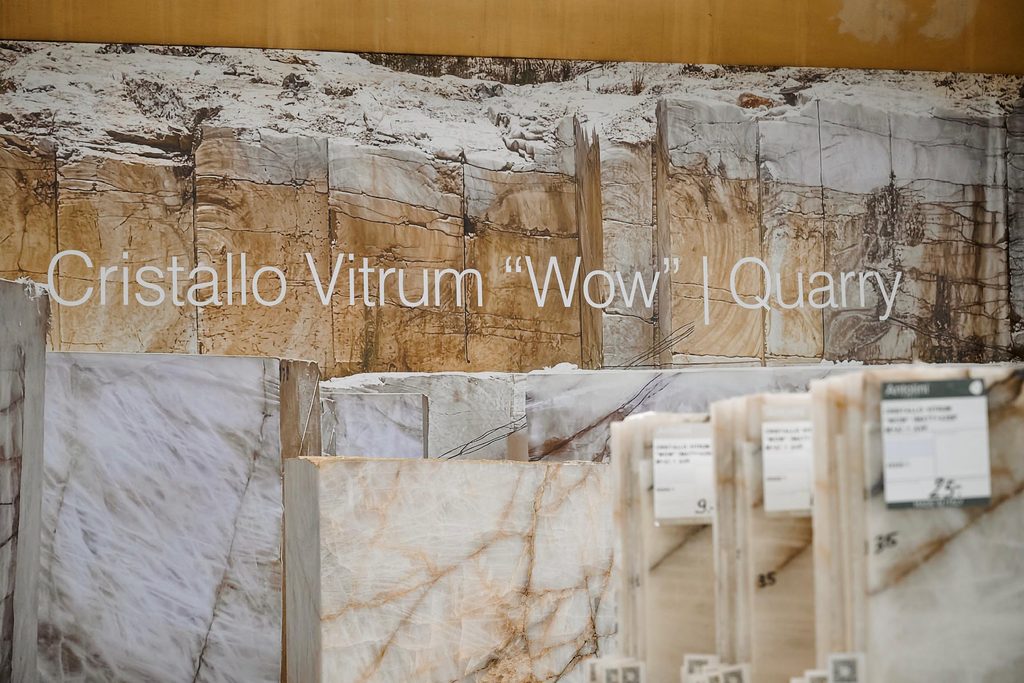
Crafted from Cristallo Vitrum®, a crystal/natural quartz from Antolini’s Exclusive Collection, the labyrinth led into a dimension where the physical boundaries of the stone seemed to gradually dissolve. Bathed in light and multiplied by the mirrored surfaces, veining, transparencies, and reflections spread throughout the space; the space suddenly expanding and opening out into the Infinity Space. Here, a platform in Quarzite Madeirus projected outwards like a jetty over a mirrored surface, the material thus becoming a threshold between real space and reflected space, in a perceptual experience in which the age-old solidity of stone gives way to the illusion of infinity.
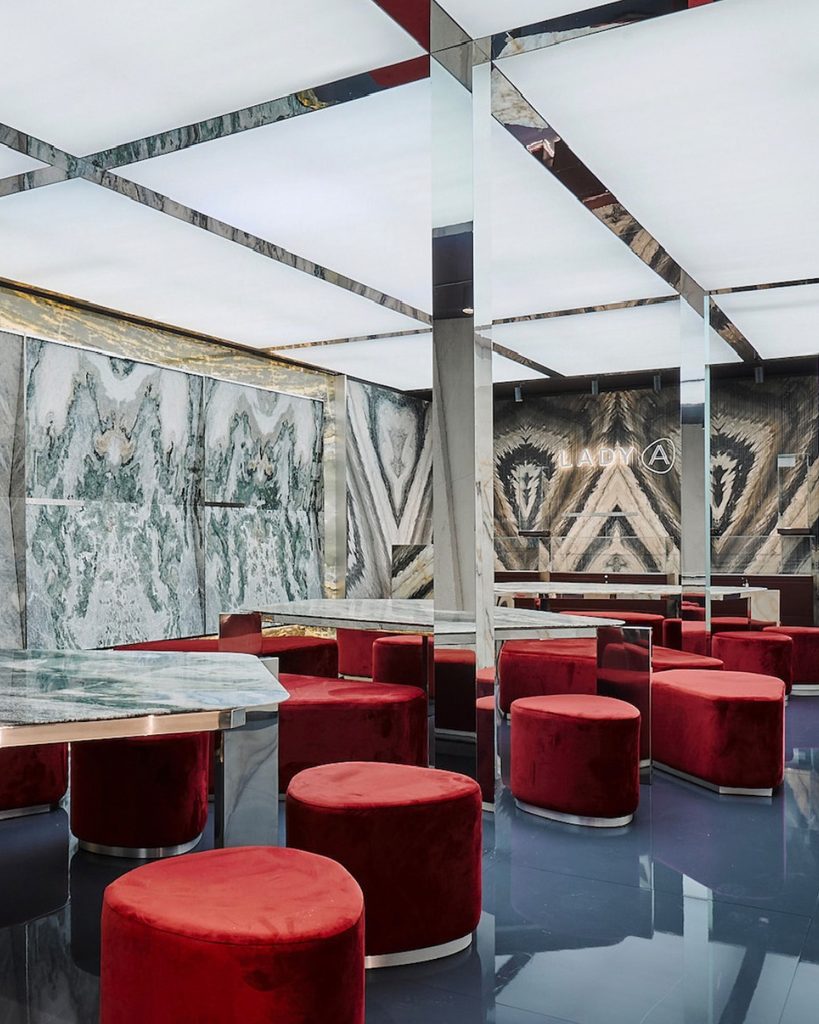
As they exited, visitors were led to the lounge. Inspired by the 1970s but reinterpreted through a contemporary lens, the lounge’s defining feature was a backlit wall in Irish Green. The wall’s geometric patterns were echoed by the organic shapes of the tables, with tops in Pangea Green, Quarzite Cielo and Cristallo D’Or, which alternated between Antolini’s Luxand Matt finishes.
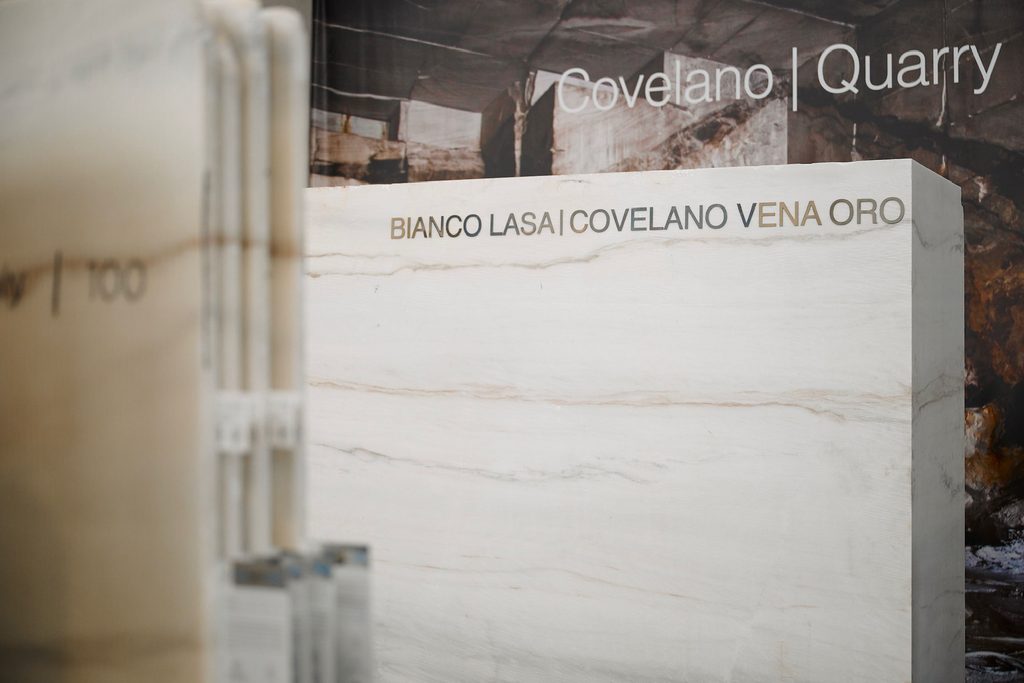
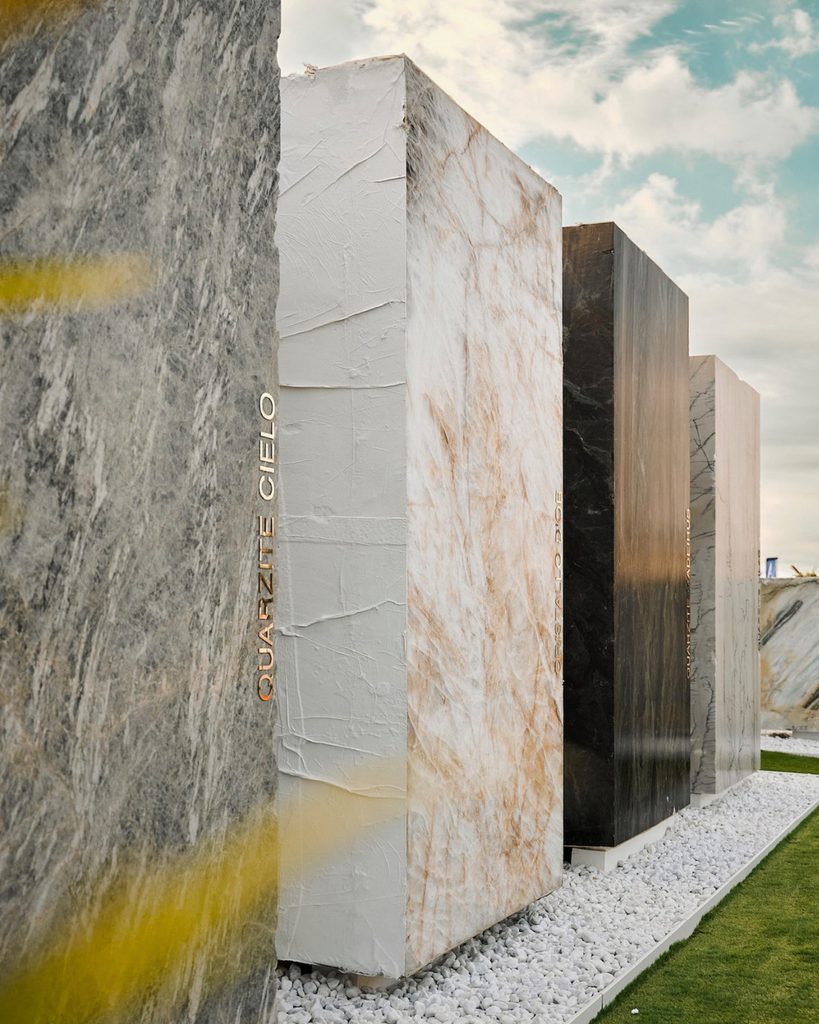
Opposite the main entrance to the trade fair, in the Gallerie Mercatali, the Antolini Pavilion took advantage of the majestic post-war industrial architecture, with monumental blocks in various finishes. Each material was placed in relation to the landscape from which it originated. The Pavilion became a landscape of landscapes, in which colors, stratifications and patterns formed over the course of millennia compose a multi-faceted and collective narrative.
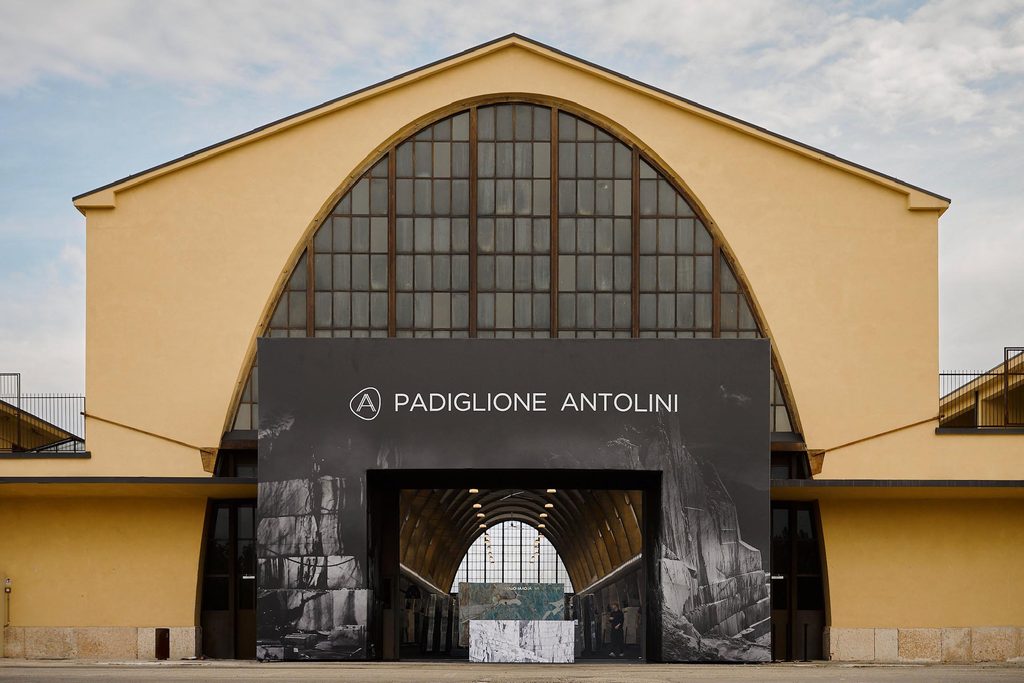
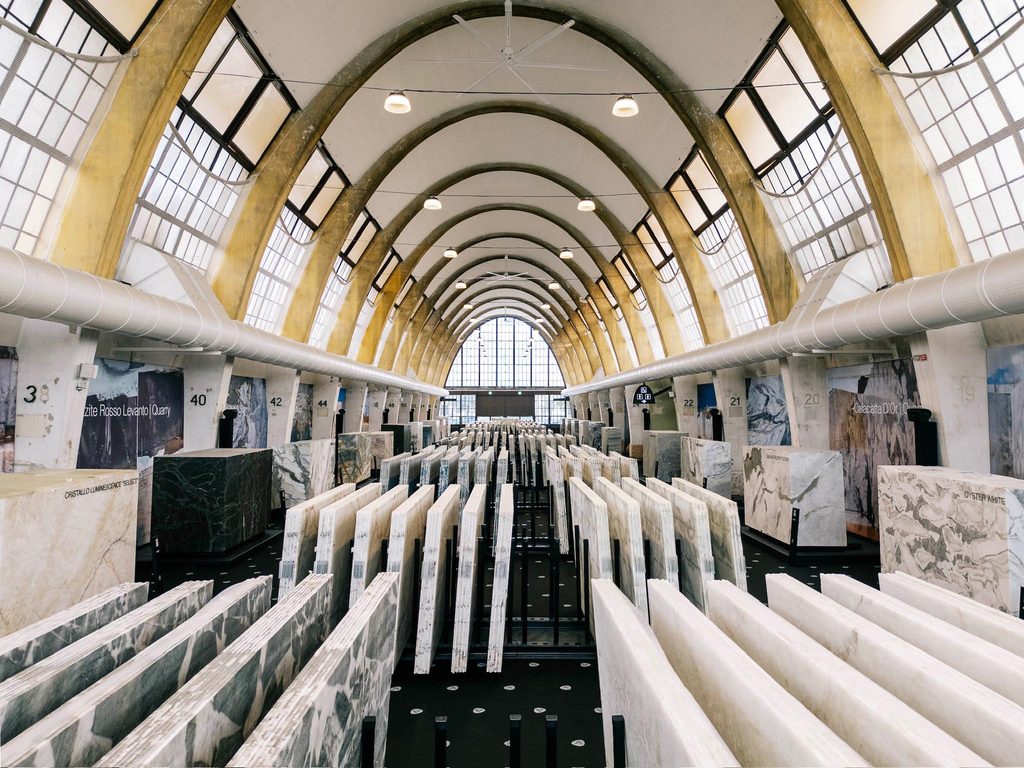
The stand and the AntoliniPavilion were described as two chapters of a single narrative: the former exploring the perceptual and design possibilities of stone, transforming it into an immersive experience; the latter revealing its origins, character and the long journey from nature to architecture.