The Hidden Craftsmanship Behind Minimalist Interiors
Why simplicity is harder than it looks and how clever design can contribute to its success
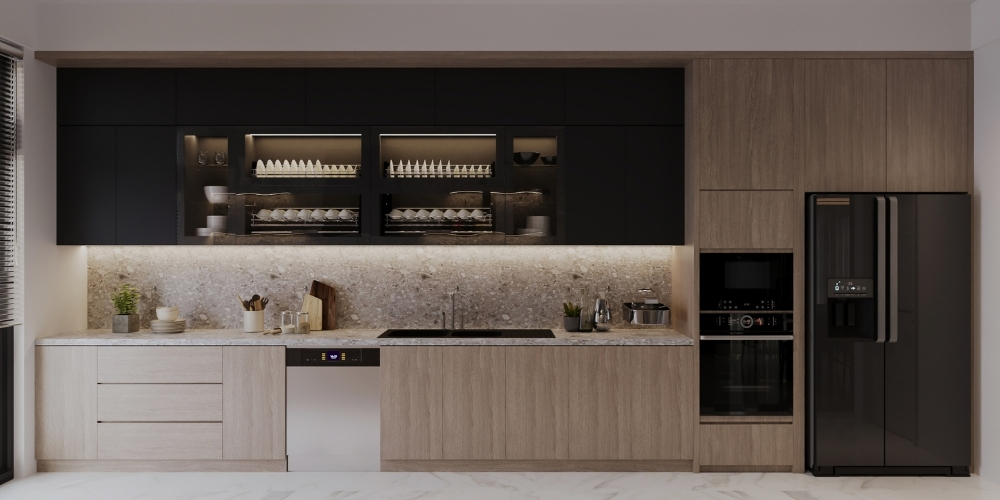
Minimalism has become one of the defining aesthetics of contemporary Australian homes, closely following global design trends. Clean lines, uninterrupted surfaces, handleless cabinetry and restrained material palettes have replaced the ornate detailing and decorative embellishments that once defined luxury.
To many clients, minimalist interiors appear effortless. With fewer visible features, they can even seem simpler to design and build. But we know the reality couldn’t be further from the truth.
For interior designers and cabinetmakers, minimalist spaces often represent the greatest technical challenge. When every line is exposed and every junction is visible, precision becomes paramount. There is no decorative trim to disguise imperfections, no elaborate mouldings to distract the eye, and nowhere to hide poor workmanship.
Ironically, the less you see, the more skill it usually takes to achieve.
Precision Is the Design
Traditional interiors often rely on decorative elements to create visual interest and add tactile qualities. In minimalist design, however, the craftsmanship itself becomes the feature:
✔️A perfectly aligned bank of drawers
✔️Consistent shadow lines
✔️Seamless grain matching across cabinet fronts
✔️Invisible fixings
✔️Flush transitions between materials
These subtle details may not be immediately obvious to a client, but collectively they create an impression of quality that people instinctively recognise. When reveals vary by even a few millimetres or panels don’t align perfectly, the eye notices; even if the viewer can’t explain why the space doesn’t feel quite right.
In minimalist interiors, precision isn’t simply part of the build; it is the design.
Handleless Doesn’t Mean Easier
Handleless cabinetry has become synonymous with contemporary kitchens and wardrobes, offering uninterrupted surfaces and a calm, architectural appearance. Yet removing handles introduces an entirely new level of complexity.
Integrated finger pulls, recessed rails, push-to-open systems and shadow-line details all require careful planning long before production begins. Every dimension, clearance and hardware selection must work together seamlessly.
Even seemingly simple considerations become more important:
✔️Will large drawers remain comfortable to open?
✔️Will fingerprints become more noticeable on darker finishes?
✔️Can appliances be integrated without compromising usability?
✔️How will cleaning and maintenance affect long-term performance?
Creating a minimalist appearance often involves solving more design challenges, not fewer.
Every Millimetre Matters
One of the defining characteristics of high-quality joinery is consistency. In traditional cabinetry small inconsistencies can sometimes go unnoticed due to the other visual elements drawing focus. In minimalist interiors they become a defining visual feature.
Maintaining perfectly consistent reveals across an entire kitchen requires precise product specification, careful manufacturing, accurate installation and meticulous adjustment. The same applies to stone benchtops meeting cabinetry, appliance integration and ventilation, bulkheads, wall panelling and shelving.
Nothing can be “close enough”.
Every component relies on the accuracy of the one before it, making collaboration between designers, manufacturers and installers more important than ever.
Material Selection Becomes More Critical
When decorative features are reduced, materials naturally receive greater attention. Timber grain, stone veining, painted finishes and textured surfaces all become focal points. Book-matched veneer, continuous grain alignment and carefully selected timber boards require additional planning and material yield. Stone slabs often need to be selected with waterfall edges and junctions in mind to maintain visual continuity.
Even paint finishes require greater consideration.
Matte surfaces remain highly sought after for their soft, understated appearance, but darker colours can highlight fingerprints, while some light finishes reveal shadows and imperfections more readily.
Choosing the right material is no longer simply about colour; it is about how that material performs under close scrutiny.
Simplicity Requires Restraint
A la Coco Chanel, one of the most overlooked skills in contemporary design is knowing what to leave out.
Successful minimalist interiors rely on disciplined decision-making. Every element must justify its presence. Rather than layering multiple finishes, designers need to carefully balance proportion, texture, lighting and materiality to create visual interest.
✔️A subtle timber edge profile
✔️A recessed LED strip
✔️A softly textured laminate
✔️A beautifully detailed shadow line
Individually these details may seem insignificant but together they create richness without clutter. It’s a philosophy of refinement rather than reduction.
The Value of Craftsmanship
Clients sometimes question why minimalist joinery can command a premium price. After all, if there are fewer decorative elements, shouldn’t it cost less? We may know that minimalist cabinetry often demands greater investment in design development, manufacturing precision and installation expertise but we need to find a way to clearly and accurately explain to clients that:
✔️Higher-quality hardware ensures flawless operation
✔️Better materials minimise movement and improve finish quality
✔️Additional time is spent checking alignments, matching grain and refining details
✔️Installation tolerances become tighter, requiring greater skill on site
And that what they are paying for isn’t complexity; it’s accuracy. Accuracy takes time and time equals money.
A Lasting Investment
Perhaps one reason minimalist interiors continue to resonate is their longevity.
While trends come and go, well-executed simplicity rarely dates. Clean forms, natural materials and thoughtful detailing create spaces that feel timeless rather than fashionable.
This makes quality craftsmanship even more important.
A minimalist kitchen isn’t simply expected to look good on installation day. It should continue to perform beautifully for decades. That durability comes from considered design, precise manufacturing and careful installation.
Celebrating the Craft Behind the Calm
Minimalist interiors may appear quiet but behind their calm exterior lies an extraordinary amount of thought, planning and craftsmanship. Every flush panel, every perfectly alignment, every seamless junction represents countless decisions made by designers and cabinetmakers who understand that simplicity is never accidental.
As Australian clients continue to embrace pared-back interiors, the value of skilled craftsmanship will only become more evident. Because in the end, the best minimalist spaces don’t look empty, they look effortless. And effortless is often the hardest thing to create.