The Key To Design Success
Why good ergonomics in the kitchen is the quiet upgrade that changes everything
A kitchen can look stunning and still be difficult to live with. Too many steps, awkward reaches, cluttered work zones, heavy doors, and storage that forces the user to crouch, stretch, or “dig” for everyday items can turn routine cooking into a slow, frustrating (and sometimes painful) experience. That’s why designing the kitchen around real human movement matters as much as materials and aesthetics.
Ergonomics done well is the hidden key to design success. The user shouldn’t notice the background planning; the kitchen simply works as they move naturally from storage and preparation, to cooking and clean up without obstacles or wasted motion. Items are where they are expected to be. Doors and drawers open easily. Everything is visible and accessible. Your client stops “fighting” the kitchen and starts using it fluidly and intuitively.
In practical terms, good ergonomics reduces:
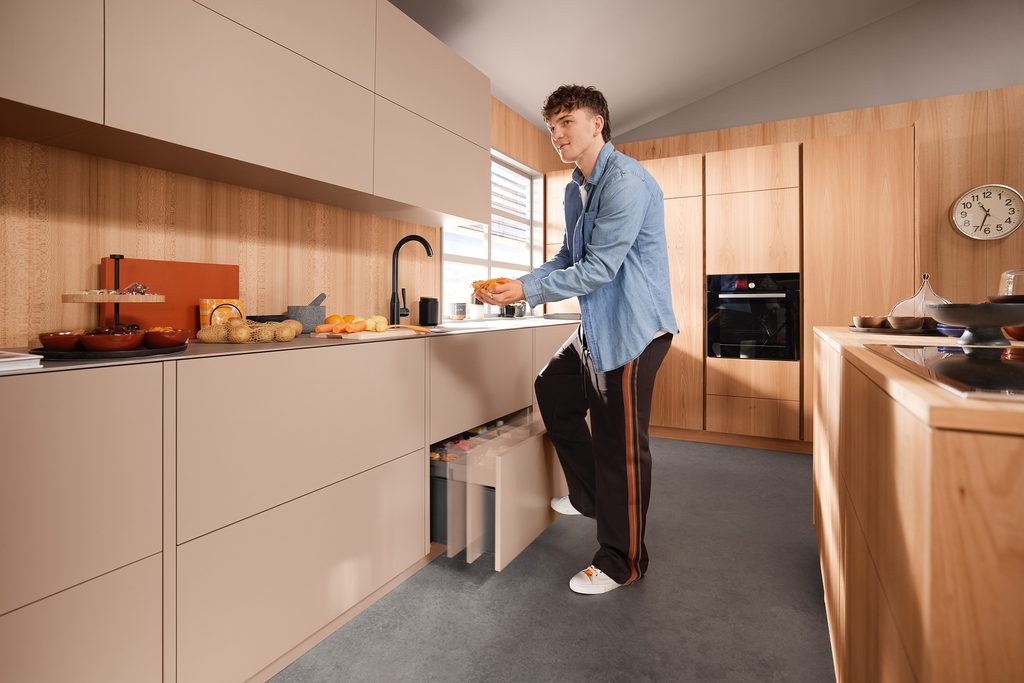
✔️Bending and kneeling to reach deep, low shelves
✔️Overreaching into tall cabinets or back corners
✔️Lifting strain from heavy fronts, sticking drawers, or unstable storage
✔️Work interruptions caused by cluttered zones and poor organisation
✔️Accidents from awkward handling, slamming fronts, or blocked pathways
Create ergonomic kitchens without compromising on design
Blum products support ergonomic outcomes by enabling storage that is more accessible, motion that requires less effort, and cabinetry that maintains its performance through daily use. For architects, designers, cabinet makers and joiners, that translates into fewer compromises between form and function.
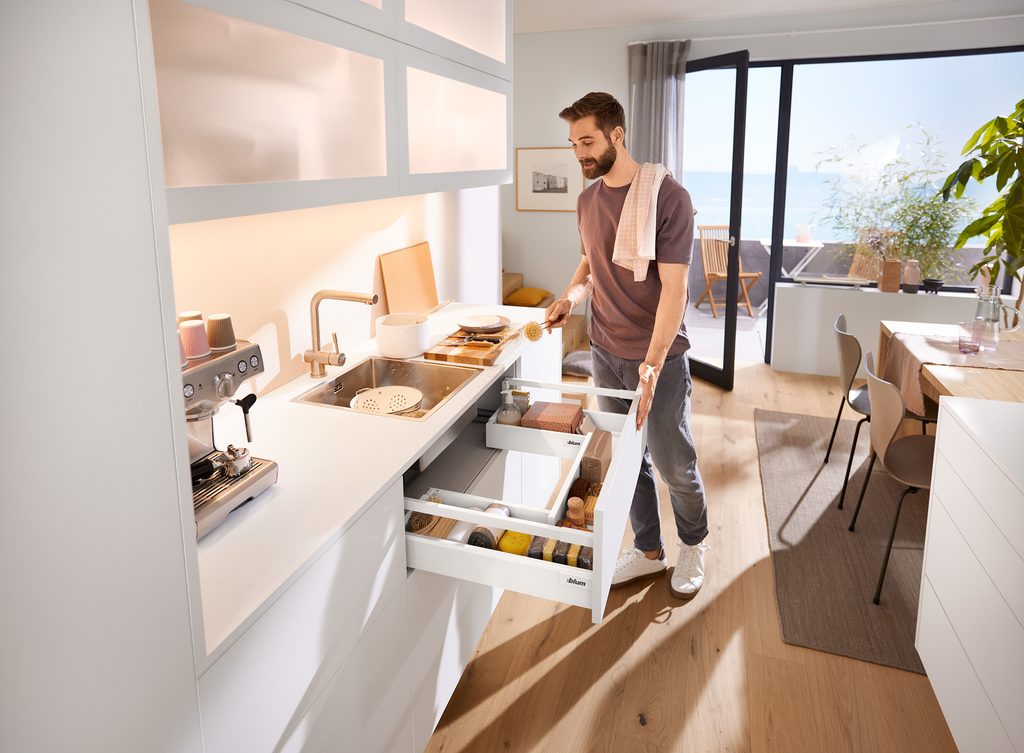
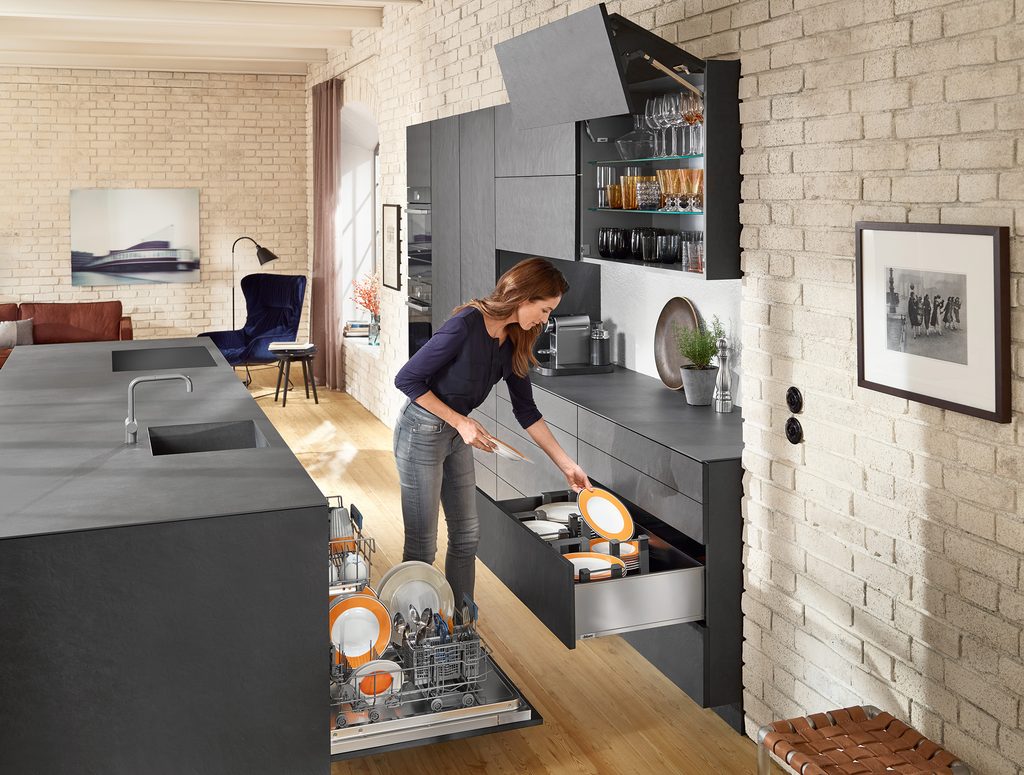
Kitchens should be designed around real-life workflows:
Allocate zones/workflow: Define clear areas for provisioning, preparation, cooking, and cleaning so storage aligns with tasks and reduces unnecessary steps.
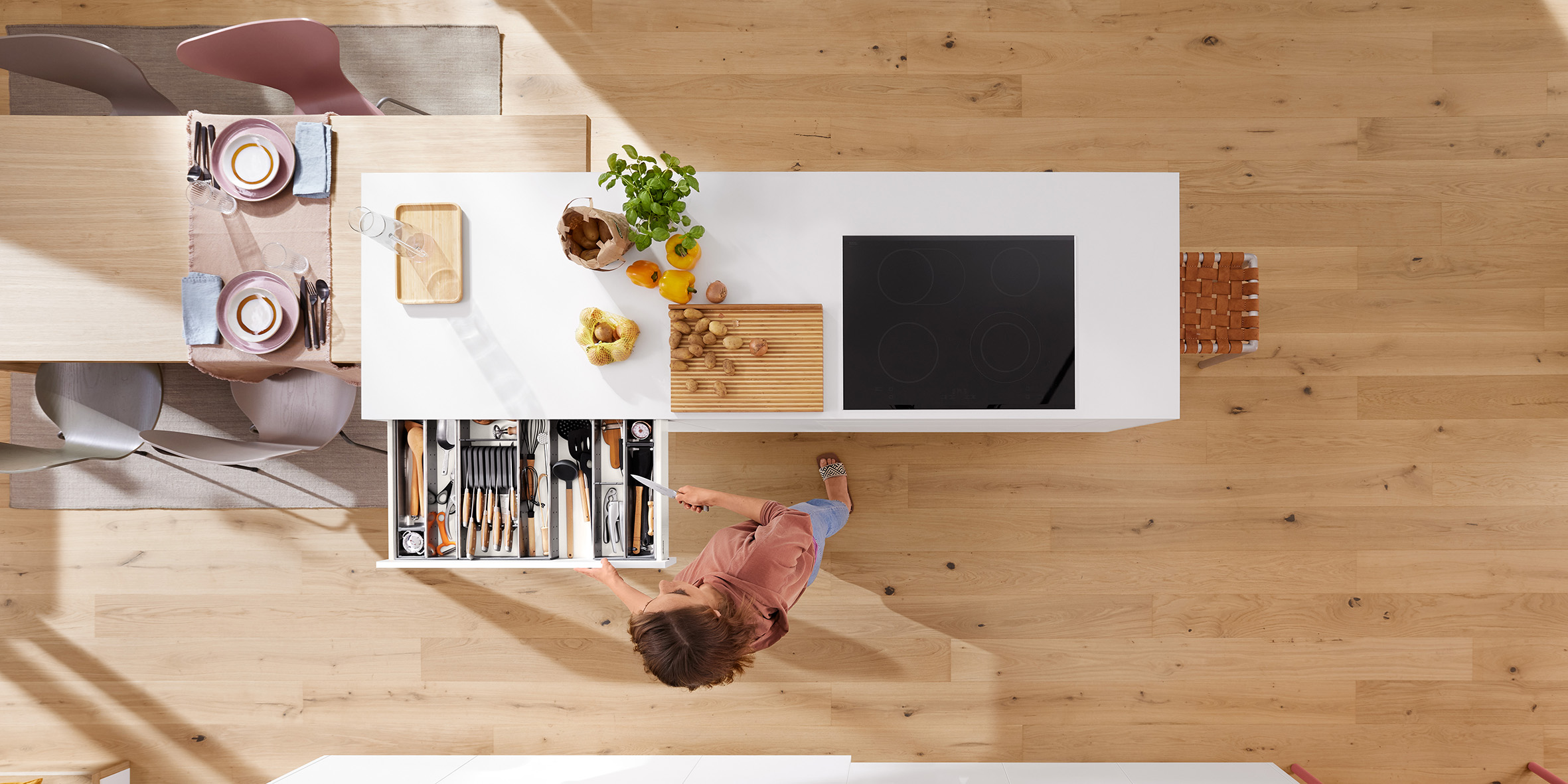
Full-extension drawers such as TANDEMBOX, MERIVOBOX and LEGRABOX over base cupboards: Improve visibility and access by bringing contents out to the user, minimising bending, reaching, and rummaging.
Effective drawer organisation with ORGA-LINE and AMBIA-LINE: Use internal dividers/inserts so everything has a dedicated place, stays stable, and is easy to find and return.
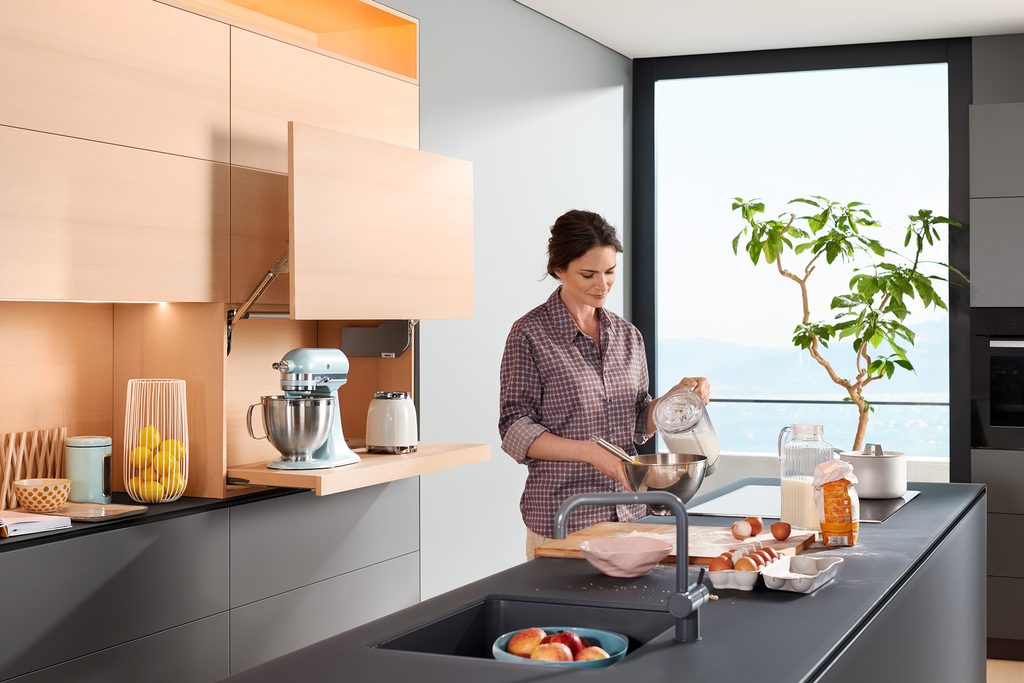
AVENTOS lift systems for overhead storage: Use upward-opening lift fronts to avoid door swing into the work zone and provide safer, clearer access at eye level.
Motion technology: Soft-close BLUMOTION and assisted-opening solutions such TIP-ON and SERVO-DRIVE reduce effort, noise, and wear, supporting smoother operation especially when hands are full or in high-use kitchens.
Blum ergonomic solutions help translate these principles into consistent, repeatable outcomes because the user experience is as much engineered into the hardware as in the layout. Just as importantly, Blum products undergo rigorous testing to ensure reliable performance and durability, helping the kitchen operate smoothly for the lifetime of the furniture.